The Police War Against Move

Move: Confrontation In Philadelphia

Directed by Karen Pomer and Jane Mancini (1980) and Ben Gerry and Ryan McKenna (2004)

Film Review

This documentary is the most comprehensive I’ve seen on the African American group Move and the brutal campaign against them by the FBI and Philadelphia police. This would culminate in a police helicopter dropping a bomb on them in 1985. The resulting fire destroyed 61 homes adjacent homes. This documentary an amalgamation of a film Karen Pomer and Jane Mancini produced in 1980 and one Ben Gerry and Ryan McKenna put out in 2004.

Narrated by the late Howard Zinn, it begins by exploring Move’s philosophical beliefs, which led them to opt out of the capitalist white supremacist political/economic system by growing their own food and living in a nonviolent way that honored all the life.

The home the police bombed in 1985 wasn’t the first destroyed by the Philadelphia police. The first police assault against Move (in 1978) followed a long period of police brutality that caused two pregnant Move members to miscarry and the death (by blunt force trauma) of a Move infant.

The police allegedly laid siege, with tear gas, water canons and live ammunition, to Move’s first residence after neighborhood complaints of excessive noise, compost smells and stray animals. One cop died of gunshot wounds during this first assault. Nine Move members were charged with his murder, despite the absence of a weapon linked to the group (the police bulldozed the home before any forensic evidence could be collected).* All nine were convicted of third degree murder and conspiracy and sentenced to 30-100 years in prison.

Allegedly the second police siege, on May 13, 1985, also resulted from neighbor complaints. Although several Move members tried to escape the fire, were driven back into the flames by police gunfire. Eleven members, including five children, died. The sole surviving adult member, Ramona Africa, was arrested and served a seven-year sentence for inciting a riot.


*Several reporters and sources within the Philadelphia police department assert the shots killing Officer Ramp came from behind, ie he was killed by a fellow cop.


The video can’t be embedded for copyright reasons but can be seen free at the following link:
https://christiebooks.co.uk/anarchist_films/move-confrontation-in-philadelphia-1980-karen-pomer-jane-mancini/

Is South African Gearing Up for a Race War?

Reaping Divine Justice: South African Farmers Brace for Race War and Land Expropriation Debate

RT (2018)

Film Review

This documentary concerns proposed constitutional changes by South African president Cyril Ramaphosa that would allow the ANC government to expropriate white farmers’ land without compensation. Twenty-five years after the fall of Apartheid, 35,000 white families and businesses own 80% of South African land.* Meanwhile the Black majority suffers from 30% unemployment (50% in youths under 25), accompanied by high levels of homelessness, malnutrition and lack of clean drinking water. In fact, several studies reveal that Black Africans are now worse off economically than they were under Apartheid.

The highly religious Afrikaans farming community are arming themselves to the teeth for civil war. They anticipate that with Ramaphosa’s recent reelection, the ANC government will try to confiscate their land by force, as occurred in neighboring Zimbabwe.

The extreme racism revealed by some of their comments is mind blowing. They have no shame whatsoever in expressing their belief that God created them to fulfill a role superior because Black South Africans “lack a civilized way of life” and are “incapable of managing their own farms.”

The only serious drawback of this documentary is its failure to examine the role played by  white and foreign  owners of South Africa’s rich diamond, gold and platinum mines. These mine owners are notorious for their mistreatment of their Black workforce (which can include killing them when they strike for better wages and working conditions – see Police Fire Teargas at Miners and South Africa Miners on Strike)

There was a shortlived campaign by the ANC’s youth wing in 2011-2012 to nationalize South Africa’s mines. It was quickly sniffed out by President Jacob Zuma’s notoriously corrupt administration.**

The main argument South African economists used to oppose nationalization was that it would ruin the South African economy. They claimed the government would suck out all the profits, leading to a loss of productivity. I don’t buy it. It implies letting foreign investors suck out all the mining profits (thus systematically impoverishing the Black population) isn’t ruining the economy.

Ramaphosa purposely delayed his proposed constitutional changes pending the May 8, 2019 election results. He has now been reelected. At this point, homeless Black Africans have been peaceably squatting on large white and foreign land holdings, where they build shacks and grow small amounts of food. Thus far, the courts have sided with the landowners, but evictions are on hold pending an appeal.


*According to the New York Times, companies and trusts own the largest share of South Africa’s land (much of it acquired since the end of Apartheid). There are also a large number of white farmers with 50-year leases to farm on public land.

**In February 2018, the ANC forced former president Jacob Zuma to resign (replacing him with Ramaphosa). A clear pattern was emerging of Zuma and other ANC leaders accepting bribes and kickbacks from domestic and foreign businesses.


Colonizing Everest

Sherpa

Directed by Jennifer Peedom (2015)

Film Review

Sherpa is about the indigenous Nepaese (known as Sherpa) who escort Westerners who attempt to climb Mt Everest. Tenzing Norgay, who accompanied Sir Edmond Hillary in his 1953 ascent of Everest, is the most famous Sherpa. Serving both as guides and as burden bearers, Sherpa have a unique genetic endowment that enables them to adapt to low oxygen levels at high altitudes.

The film quite elegantly depicts how Western tour operators have transformed the ascent of Mt Everest into a multimillion dollar industry. For a charge of $70,000 (or more), Westerners stay in a luxurious base camp complex while Sherpa travel up and down the mountain with enormous platforms, tents, tables, bookcases, chairs, heater, toilets, food and oxygen tanks and other climbing equipment, as well as carting their aluminum cans and other garbage down the mountain.

The film also eloquently depicts the patronizing and condescending attitude of Western tour operators and climbers towards a group of people who undertake extremely dangerous work for very low pay. The most dangerous of the Sherpa’s duties involve repeated trips with heavy packs through the Kumba Ice Flow.*

Unfortunately the government of Nepal captures most of the domestic revenue generated by the Everest industry, despite the extreme risk the Shirpa are expected to take on.

The climax of the film is a 2014 Sherpa strike that shut down the climbing season when 16 Sherpa were killed in an avalanche and the government refused to pay death benefits to their surviving families.


*The Kumba Ice Flow is a continuously moving cascade of giant ice blocks that is subject to frequent avalanches.


The film can be viewed for the next 10 days at the Maori TV website: https://www.maoritelevision.com/docos/sherpa

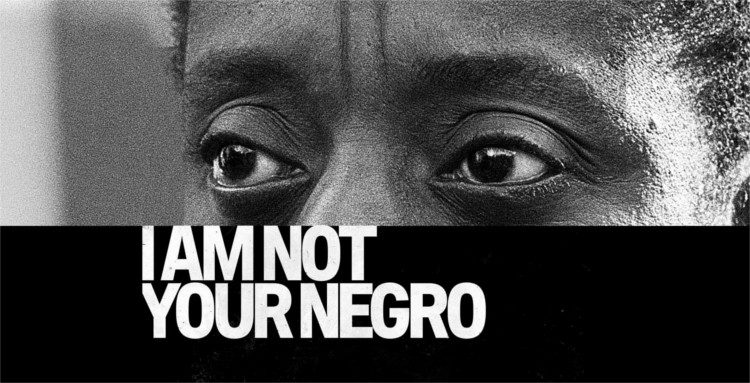
James Baldwin – I Am Not Your Negro

I Am Not Your Negro

Directed by Raoul Peck (2016)

Film Review

This documentary is based on the unfinished manuscript of African American author James Baldwin’s book Remember This House. Narrated by actor Samuel L. Jackson (in the voice of Baldwin), the film explores the history of racism in the United States through Baldwin’s reminiscences of slain civil rights leaders Medgar Evers, Malcolm X, and Martin Luther King, Jr, as well as his personal observations of American history.

The film combines film footage of the Southern civil rights movement, the 1965 March on Washington, speeches by Malcolm X, Martin Luther King and Baldwin himself, along with clips from various Hollywood films depicting a stereotyped view of Black/White relations.

In his unfinished book, Baldwin describes leaving the US in 1948 to live in Paris, seeking to escape a constant fear of racial violence that hampered his writing. He returned to the US in the 1960s when the civil rights movement started. He felt motivated both by an obligation to support the struggle and a desire to reconnect with his family and the African American community.

For me, the most interesting part of the film is Baldwin’s insightful analysis of the white neuroticism that underlies racism. Baldwin describes a total separation between the public and private lives of white people. Because they are so terrified of their private selves, whites build elaborately phony public lives. Guilty and constricted, they sink into what Baldwin describes as “moral apathy.” Incapable of seeing beyond their own selfish needs, they find it easier to project the ugliness they sense in themselves on a convenient scapegoat (ie African Americans).

Baldwin makes the point repeatedly that white violence against Blacks is just as prevalent in the North as the South.

The film includes footage of explosive debates in which Baldwin directly confronts white critics who chide him for being too bitter and too focused on race.

It also makes reference an argument Baldwin had with Bobby Kennedy over his unwillingness to use troops to escort a Black teenager (to prevent an angry mob of white adults from cursing, threatening, jeering and spitting on her) on her first day at an all white high school. Kennedy declined to send troops, dismissing the deployment as “an empty moral gesture.”

The film can’t be embedded for copyright reasons but can be viewed free at the Maori TV website:

I Am Not Your Negro

Israeli Occupation and Jerusalem’s Palestinian Cabbies

Jerusalem’s Palestinian Cabbies

Al Jazeera (2019)

Film Review

This film provides an interesting glimpse into the working lives of Palestinian cab drivers in West Jerusalem. Divided into East and West Jerusalem since the founding of Israel in 1948, East Jerusalem has been under Israeli occupation since the 1967 six-day war.

Although the Palestinian Authority theoretically controls West Jerusalem (under the 1993 Oslo Accords), Israeli presence is increasing. This relates, in part, to the illegal seizure of Palestinian homes for Israeli settler homes and schools.

Although West Jerusalem is legally part of Palestine, all the cabs are Israeli owned and licensed. The city’s Arab taxi drivers are required to accept Israeli passengers, despite the risk of being harassed by them. They are also expected to learn Hebrew.

The drivers talk freely about about losing prior (lucrative) careers due to Israeli security crackdowns. At the same time they feel extremely grateful to have any work at all in occupied Palestine. Several talk about the important role they play in educating foreign tourists about the plight of Palestine – many are totally unaware that Palestine or Palestinians exist.

In the most interesting part of the film, a Palestinian driver and his Israeli passenger have a  vehement argument (in Hebrew).


Al Jazeera vs Blackwater Founder Erik Prince

Erik Prince Acknowledges 2016 Trump Tower Meeting for First Time

Al Jazeera (2019)

Interview

This is a most revealing interview/debate in which Al Jazeera journalist Mehdi Hasan confronts Blackwater founder Erik Prince over his current proposal to replace 50,000 NATO troops in Afghanistan with 8,000 private military contractors – from Prince’s Hong Kong-based company Frontier Services Group.

In response to highly specific confrontations concerning Blackwater’s fraudulent billing and war crimes, Prince literally oozes sociopathy. In addition to blaming the US State Department for Blackwater’s well-documented war crimes, he blames a Blackwater contractor’s 2018 murder conviction on a Washington DC jury (DC has a majority Black population).

In 2012, Blackwater paid a $7.5 million settlement to resolve other criminal charges, including billing fraud

Prince has compared his proposed Afghanistan project to the notorious British East Indian Company that colonized India and Southeast Asia. When reminded that Ashraf Ghani, the current president of Afghanistan, opposes his proposal, Prince smugly assures Hasan that Ghani faces defeat at the next election.

When asked about his current contract with China’s government to build a training camp in Xinjiang (to help Beijing crack down on minority Uighers), Prince asserts his company is merely providing construction services and security training for overseas-bound Chinese officials. A recent article in the Guardian suggests otherwise: Blackwater’s Erik Prince to Build China Training Camp

Hasan also asks Prince about lying to the US Congressional Intelligence Committee about his involvement in a 2016 Trump campaign meeting with a Russian oligarch. Prince admits to the meeting but denies lying about it. When Hasan confronts him with the hearing transcript, Prince contends the transcriber got it wrong.

The interview can’t be embedded for copyright reasons but can be viewed free at the Al Jazeera website: Erik Prince Acknowledges Trump Tower Meeting For First Time


Australia: A Battle to Win Back Ancestral Lands

Putuparri and the Rainmakers

Directed by Nicole Ma (2015)

Film Review

This is a very poignant documentary about the indigenous elders who led the effort to reclaim their land in the Great Sandy Desert in Western Australia.

After years of protesting about mining in their sacred land, in 1992 aboriginal Australians won the right to claim title to their ancestral lands if they could prove their historic connection to them. In this case, the narrator Putuparri’s grandparents and other aboriginals were kidnapped (for their knowledge of hidden water holes) by white cattlemen seeking to set up outback cattle ranches. When the ranch owners moved on, they dumped their 2,000 aboriginal workers in a nearby refugee camp.

In 1992, 50 elders from four tribes submitted a giant map painting of the Great Sandy Desert to prove their connection to the lands they were claiming. It took 15 years, but in 2007 a federal court granted them title to most, but not all of the ancestral land they claimed. Because the “white fellah” only knows how to draw straight lines, the sacred land of Putuparri’s grandfather was bypassed.

His family went back to court. In 2014, three months before he died, he finally won title to his ancestral land.

“It’s a Miracle We’ve Survived This Far”

Mental Midgets/Musqonocihte

By Trace Hentz

Blue Hand Books (2018)

Book Review

This exquisite little book is actually two books in one – both thoughtful compilations of original poems, prose snapshots, memes, photos and “creative nonfiction,” all beautifully laid out on the page.

Mental Midgets contains a moving tribute to Native American musician, poet, philosopher and activities John Trudell, who died in 2015.

General themes covered in both books are colonization, the survival and resistance of indigenous people and the attitude of hopeful resistance all of us need to survive the barbarity and insanity of advanced industrial capitalism.

There are also thought-provoking quotations from fellow dissidents Noam Chomsky, Michael Moore, Lev Tolstoy, Chris Hedges, Kurt Vonnegot and Neil Young.

It’s the type of book I envision re-reading repeatedly over coming months and years.

Coca Cola: The Ugly History

Mark Thomas on Coca Cola

BBC (2007)

Film Review

This documentary investigates the unsavory history and practices of Coca Cola, the world’s largest soft drink corporation. Including

  • their support of the 1936 Olympics in Nazi and ongoing business collaboration with Hitler during World War II. When the US entered the war in 1941, its Germany subsidiary developed Fanta especially for the German market, owing to their inability to import cola syrup.
  • their refusal to promote African Americans to administrative and management positions, leading Martin Luther King to call for a nationwide Coke boycott the day before his assassination. The issue remained unresolved until 2000, when Coke settled a federal civil rights lawsuit for $200 million.
  • their longstanding battle with Indian farmers over the depletion of aquifers they rely on for well water.
  • their collaboration with right wing paramilitary groups in Columbia to murder labor activists and their families for protest poor pay and working conditions in local bottling plants.
  • their refusal to crack down on their sugar supplier in El Salvador for illegally employing 30,000 children under 12 in sugar cane fields.
  • contamination of local residents’ drinking water in Nejapa El Salvador.
  • refusal to honor growing call by child health advocates to cease advertising caffeinated drinks to children under 12.

Malcolm X vs Martin Luther King

Malcolm X and Martin Luther King Face to Face

Al Jazeera (2018)

Film Review

This documentary compares and contrasts the anti-racism campaigns of Martin Luther King and Malcolm X during the 1960s. It combines commentary from Black scholars and civil rights activists with vintage footage of the two leaders.

Malcolm was highly critical of King for strategies he claimed sought to win the support of white people. Malcolm frequently asked to debate him though King always refused. Malcolm opposed non-violence as a strategy, maintaining Blacks had a right to defend themselves when cops beat them up. He also disagreed with King’s focus on integration and voting rights. He believed asking Black people to trust whites was dangerous and alienated them from deep-seated feelings about the way whites treated them. Likewise he believed voting was useless so long as whites were determined to disempower Black people.

Unlike King, a Baptist preacher, Malcolm also rejected Christianity (“the religion of slavery”) were he became second in command at the Nation of Islam.

It was largely under Malcolm’s influence that African Americans became proud to be Black,  and “Negroes” began referring to themselves as Black.

The two men met only briefly in 1964 at a congressional hearing on Lyndon Johnson’s Civil Rights Act.

Following Malcolm X’s 1965 assassination, King seemed to become much more radical, as he took up Black poverty and the Vietnam War as key issues.