The Poetry of Dispossession

Trudell

Heather Roy (2005)

Film Review

Trudell is a documentary about the life and work of American Indian Movement (AIM) activist, poet and philosopher John Trudell. The film is made up of archival and performance footage, interviews with Trudell, family members and film and rock celebrities who have worked with him, and samples of his poetry.

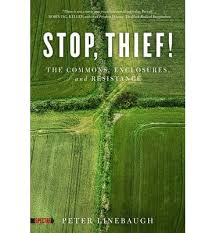
Stop Thief: the Commons Enclosures and Resistance (see Forgotten History: the Theft of the Commons) has helped me understand the Indian Wars and the continuing oppression of Native Americans in a whole new light. As author Peter Linebaugh describes it, the Indian Wars boil down to a determination by Jefferson and other early US leaders to enclose (ie steal) Indian lands to fence them off as private property. And as Trudell emphasizes in this film, repeated treaty violations all revolve around US efforts to steal yet more Indian land and resources for profit.

Trudell’s Role in AIM

Trudell first became an activist in his early twenties, with the Native American occupation of Alcatraz in 1970-71. The federal government declared Alcatraz Island surplus property after closing the prison in 1973. Trudell and his fellow activists claimed it under provisions in the 1868 Fort Laramie Treaty, which promises Native Americans access to unused federal land.

He eventually became secretary of AIM in Minnesota and helped organize the Trail of Broken Treaties occupation of the DC Bureau of Indian Affairs office in 1972. He also helped organize the AIM defense against the FBI siege on the Pine Ridge Reservation in 1973. The standoff at Wounded Knee related to yet another treaty violation, in which the federal government allowed mining companies to mine for uranium on tribal land. In one interview, Trudell reminds us that 50-70% of all US energy resources are on native lands. Their extraction nearly always violates US treaty commitments. Worse still, radioactive contamination from uranium mining is a major factor in the high mortality rate at Pine Ridge and other reservations.

When the residents of Pine Ridge tried to block the mining companies, the FBI sent in paramilitary units equipped with helicopters and tanks in addition to covert death squads. Between 1973-76, Pine Ridge had the highest murder rate in the country.

In 1975, following a fire fight that killed two FBI agents, AIMS members Bob Robideau, Darelle Butler and Leonard Pelletier were charged with murder. Robideau and Butler were tried in Cedar Rapids, where AIM enjoyed strong public support. They were acquitted on self-defense grounds. Pelletier, who was tried in Fargo, was prohibited from using their acquittal in his defense. He remains in prison to this day.

A Suspicious House Fire

In 1979, Trudell’s wife and two children were killed in a house fire he believes was started by the FBI. Between 1969-70, the FBI compiled a 17,000 page dossier on him. They also made a direct threat to go after his family.

He began writing poetry as a way of coping with the emotional turmoil of losing his family. His first albums were spoke word against a background of indigenous chants. He later worked with prominent rock artists who set his poems to music.

Forgotten History: the Theft of the Commons

stop thief

Stop Thief: the Commons Enclosures and Resistance

by Peter Linebaugh (2014)

Book Review

Free download at https://libcom.org/library/stop-thief-commons-enclosures-resistances

Occasionally you come across a book that totally turns your worldview on its head. This book is definitely one of them.

Stop Thief is about the loss of the Commons through enclosures,* which author Peter Linebaugh maintains is the essence of capitalism. Until 200 years ago, communally owned moors and forests were fundamental to all human civilization. In Europe, the Commons included specific customary rights, including gleaning, grazing rights, and access to the forest for medicines and wood for fuel, housing and tools. These rights had been guaranteed for thousands of years (they’re mentioned in both the Old and New Testament) and were codified in the Magna Carta and the Charter of the Forest. Thanks to the Commons, which provided for the basic subsistence needs of the population, there was virtually no crime as we know it and no extreme poverty.

In the essays in Stop Thief, Linebaugh details 800 years of enclosures, as well as the popular riots and rebellions that have resisted them. In doing so, he establishes a clear continuity between the organized resistance against European enclosure and the work of great revolutionary thinkers, such as Karl Marx, Thomas Paine, William Morris and Edward Thompson

According to Linebaugh, the European enclosure acts didn’t just enclose (privatize) moors and forests, but they enclosed handicrafts as factories, community markets as shops and women as units of reproduction who ceased to have a legal persona (women who resisted enclosure were burned and/or tortured as witches).

Enclosure: A Global Phenomenon

Enclosures, which occurred worldwide thanks to European colonization, began in the 13th century with peaks in the 15-16th century, the 18th-19th century and the 21th century. The latter have resulted in the theft of pensions and homes by banks, the privatization (and destruction) of the environment, the capture of health care by insurance companies and current attempts to privatize (enclose) the Internet. In other words, the essence of capitalism is dispossession, ie theft.

In Europe, enclosure mainly took the form of imprisonment and the privatization of communal land. In the 18th century, enclosure was accompanied by a prison building spree and the creation of a “civilian” police force, as well as massive emigration to European colonies. Commoners who persisted in claiming their customary rights were criminalized and either hanged (for minor crimes such as stealing firewood or a loaf of bread) or imprisoned.

Resistance to Enclosure Has Been Continuous

The resistance to enclosures, especially in England and Germany, was more or less continuous. Over 800 years, peasants blocked privatization of their communal land by petitioning, fence breaking, stoning officials for posting enclosure notices, riots and organized rebellion. Despite continuousl military occupation, it took 17 years to drive the peasants out and fully privatize Otmoor.

The Peasants Revolt of 1381, the Ketts Rebellion of 1549, the formation of Levellers, Ranters and Diggers movements that would culminate in the English Civil War in 1649, and the formation of the Luddites in the late 18th century were all part of the popular resistance to enclosures.

Marx and the Theft of Wood

Marx refers to the process by which the ruling elite encloses the Commons, depriving common people of the means of subsistence (aka the means of production), as primitive accumulation. Linebaugh traces how Marx’s interest in political economy was directly influenced by coming of age as the Moselle region in Germany was being enclosed. His very first essays on “Debates of Law and the Theft of Wood” expressed outrage at the appropriation of local forests by rich burgermeisters and the criminalization of customary wood gathering.

I also really enjoyed the essays on Tom Paine, which discuss his upbringing as the Norfolk commons was being enclosed and his critical influence in the Irish and French revolution. His essays and books calling for the restoration of the Commons are rarely discussed in American history textbooks.


*Enclosure is the legal (usually violent) process by which common people are driven off communal land to enable it to be fenced off as private property.
**The Charter of the Forest is a charter originally sealed by King Henry III under the regency of William Marshall, 1st Earl of Pembroke. A companion document to the Magna Carta, it re-established rights of access to the royal forest that had been eroded by William the Conqueror and his heirs.

How to Spot an Undercover Cop

Cutting Edge: Confessions of an Undercover Cop

Channel 4 (2011)

Film Review

This documentary is about a member of Britain’s National Public Order Intelligence Unit (NPOIU) who served as an undercover operative inside the British environmental and antifascist movement between 2002-2009. Mark Kennedy was recruited for the elite NPOIU while working as an undercover narcotics officer. Following three weeks of specialized training, he assumed the role of a vegan anarchist named Mark Stone. For seven years, he reported daily to an NPOIU cover officer with information he had gleaned about fellow activists and their protest campaigns.

The NPOIU justification for infiltrating the environmental movement was to ensure the police response was “proportional” to the size of environmental protests. However over time Kennedy realized their true goal was to minimize the effectiveness of the environmental movement. As a result, he became increasingly conflicted about the role he played in undermining activists who seemed to have a genuine social function.

London’s massive March 2003 demonstration against the Iraq War was one of the first protests he infiltrated. Over time Kennedy, who was living under the cover name of Mark Stone, was admitted to the inner circle of the environmental movement. By 2005, he was assuming major responsibility for managing logistics for the 2005 G8 protest at Glen Eagles and the attempted shutdown (in 2006) of the Drax Power Station.

He also began a four year relationship with a female activist, in clear violation of NPOIU policy. According to police officials interviewed in the film, his cover officer had to know about the affair and should have terminated the assignment. It appears Kennedy’s superiors allowed the affair to continue for four years owing to the high quality of the information he was providing.

In 2005, he was suspended after riot cops beat him up during a protest, leading to an investigation on a possible charge of assaulting a police officer. After three months, he was suddenly recalled to duty to infiltrate the Spanish antifascist movement. Spain had contacted NPOIU requesting their assistance.

The NPOIU was forced to remove Kennedy from his undercover role in 2009, when information he provided led to police preventively arresting 30 protestors planning a civil disobedience at Ratcliffe-on-Soar power station. It became patently obvious Kennedy had narked on them when he was the only participant to have his charges dropped.

The NPOIU extracted him by floating the cover story he was moving to the US. After two weeks, he returned to Britain to be reassigned and was told the Metropolitan Police no longer had any use for his particular skills. He resigned, effectively ending a twenty year career.

When he tried to resume his relationship with his activist girlfriend, she happened to find a passport issued under his real name and outed him to the rest of the group – who outed him to the media.

The film concludes by raising important ethical questions about Kennedy’s undercover activity. Such as why the British police feel justified in preventing environmental protestors from executing their democratic rights. And how they justify spending millions of dollars spying on activists when Kennedy’s seven year mission failed to result in a single conviction.

US Sex Trafficking of Underage Girls

Selling the Girl Next Door

CNN (2015)

Film Review

Selling the Girl Next Door is about sex trafficking of American underage girls, a business which has moved off the street and onto the Internet. The sex services of girls as young as eleven are being advertised in the Adult Services section of Backpage.com. They were being sold on Craig’s List until CNN journalist Amber Lyon confronted owner Craig Newmark as part of her investigation.

Obviously no online marketplace is going to accept an ad for prostitution. The girls are listed as “escorts,” with revealing photos and coded language (eg “young,” “fresh,” “innocent”) to indicate they’re underage.

When you look at the millions of dollars the federal government spent on shutting down Silk Road for selling recreational drugs (see Was Silk Road Founder Framed?), it’s ironic – and frankly sickening – that they continue to allow sites like Backpage.com to traffic in underage girls.

Lyon interviews Las Vegas girls convicted for underage prostitution in Clark County juvenile detention center, as well as men who have used their services and judges, lawyers and probation officers who work with them. She also profiles one particular thirteen-year-old, interviewing her mom and going to court with her.

Blaming the Victim

The pimps who run underage girls are always on the lookout for runaways. They use the promise of affection to lure them in and violence to keep them as virtual sex slaves. In most US cities, underage girls arrested for prostitution are locked up in juvenile prisons. City and county authorities claim they have no other way to keep them off the street.

One Las Vegas judge is fronting an initiative to build a safe house for underage victims of sex trafficking as an alternative to prison. He’s being blocked by county authorities – they refuse to cough up $700,000 for probation officers to run it. Federal funding appropriated to combat sex trafficking, only goes to help foreign victims.

In the course of the CNN investigation, the threat of unwanted publicity led Newmark to shut down the Adult Services section of Craig’s List. Backpage.com, the second most popular online marketplace, immediately saw their income spike by billions of dollars. They’re owned by Village Voice Media, who refused to be interviewed by CNN.

Foster Care and Homelessness

homeless-teenHomeless Teen

Increasing teen homelessness is a long time passionate concern for me (see Homelessness: An American Disgrace, owing to my work with homeless adolescents in Seattle. According to Covenant House, more than 2 million (40% of the US homeless population) American kids will experience homelessness in any given year. Homeless teens are an extremely high-risk group: in addition to a high risk of alcoholism and drug abuse, girls especially face the risk of prostitution, pregnancy and victimization by human traffickers.

This isn’t a new problem. Along with other social justice advocates, I have been fighting for the rights of disenfranchised young people for more than thirty years. The crisis of homeless kids began with the Reagan-Thatcher social service cuts of the 1980s and dramatically worsened with the 2008 downtown. Ironically many homeless youth are former wards of the state who have “aged out” of the foster care system. After dealing with the callous indifferent of elected official for more than thirty years, I no longer believe the problem can be solved under monopoly capitalism.

Why Kids Become Homeless

Conservatives claim that teenagers become homeless by choice. This is ludicrous. Adolescents become homeless because all other options are closed to them.

Nearly half of US teens on the streets have left home to escape physical and/or sexual abuse. Another 20% become homeless from deliberate government policy, when they “age out” of the foster care system at 16-18. In the US, most states discontinue financial support for the children under their care when they turn 18 or complete high school.

The Plight of Foster Kids Leaving Care

Between 20,000 and 25,000 American foster kids are “aged out” every year. According to Covenant House, one quarter become homeless within two to four years of leaving the system. Only half have jobs by age 24. Seventy-one percent of girls “aged out” of the foster care system will be pregnant by 21.

In recent years, a handful of states have enacted legislation (supported by the 2008 Fostering Connections to Success and Increasing Adoptions Act) allowing kids to remain in foster care until age 21.* However in most states, foster kids are still put out on their own at 18, without housing, financial assistance or social/emotional support.

“Aging Out” in Britain

This is one area, in which the US seems to be doing somewhat better than the UK. According to the Guardian, the Tory government declined to fund a highly successful 2008-2011 pilot program in which eleven local authorities allowed foster kids to stay in care until age 21.

A recent BBC Radio 4 special special highlights the crisis British foster children face when the government boots them out of foster care system at age 16-18. In Britain one-third of care leavers become homeless. Many end up in the criminal justice system. Fifty percent of women aged 18-24 in juvenile and female detention facilities are foster care leavers.

“Aging Out” in New Zealand

In New Zealand Child, Youth and Family support for foster children ends at 17.
In 2014, heavy lobbying aimed at extending this age to 18 failed. In this country, the only support available to foster care leavers comes from charities such as the Dingwall Trust
This support is limited to the Auckland area. Foster kids in other regions are out of luck.

New Zealand has a homeless population of 30,000 (of a total population of 4.5 million), and approximately half are under 25.

Homeless teenagers age 16-19 can get financial assistance through the Unsupported Youth Benefit. There are no programs to assist them with housing, vocational training or social/emotional support.

No Solution Under Monopoly Capitalism

Nearly all kids who end up in the foster care system have already been victimized by physical and/or sexual abuse. They go on to be re-victimized by brutal government policies that condemn them to lives of chronic unemployment, poverty and homelessness. A wealth of studies show that ending foster care support at 17-18 doesn’t save money – it always costs more in the long run, especially when “aged out” foster kids end up in the criminal justice system.

In other words, these are throwaway children, who the savagely indifferent corporate elite is happy to consign to the fringes of society.

I no longer have any illusions this problem can be solved under monopoly capitalism. A society that treats young people – our future citizens – so callously has no future.


*I can’t find a comprehensive list of states that have extended foster care support to age 21. I know Missouri, Florida, New York, Maryland and Illinois have, but there may be others.

photo credit: Tanya Dawn via photopin cc

The Origin of Poverty

Poor Us: An Animated of Poverty

Ben Lewis (2012)

Film Review

This documentary divides the history of poverty into six broad areas: pre-civilization, “early civilization” (8000 – 800 BC), Greece and Rome (800 BC – 400 AD), the Middle Ages (400 – 1500), European colonial era (1500 -1850) and industrial civilization (1850 – present). The use of animation is surprisingly effective in painting an overview of the lifestyles typical of these different periods.

Prior to the agricultural revolution that marked the advent of civilization, no one was poor. In a hunter-gatherer society, very little work is required to procure adequate food and water. Leisure time is plentiful. The downside of being a hunter gatherer is that life is very precarious and there’s was no way of planning for sudden climate change and other natural events that periodically wipe out the food supply.

During early civilization, everyone was poor except for rich kings and priests who ran everything. There were repeated famines and the average life expectancy was 35 years.

Greek civilization produced historians and philosophers who, for the first time, tried to identify the causes of poverty. They concluded that poverty was essential to civilization because it induces people to work.

The concept of charity first arose in the early Middle Ages and is a key component of all the world religions, which emerged during this period.

The film maintains that all modern poverty results from plunder and force, mainly at the hands of European colonizers. In the early 1500s, Europe was much poorer than contemporaneous civilizations in China, Africa and the Americans. In medieval China, for example, the government was responsible for flood control and vast granaries that fed the entire population during famines.

Europeans systematically plundered and destroyed the advanced pre-European civilizations in China, Africa and North and South America. Then the European elite used this wealth and power to drive their own peasants off their communally farmed lands. Those who didn’t end up in jail or the workhouse, ended up in squalid city slums and worked in early factories.

Prior to the industrial revolution, 90% of the world lived in extreme poverty. By 1948, this percentage had dropped to 50%. By the 1970s, it was down to 15%. At present most extreme poverty is in third world countries that have been systematically exploited by the industrial North for their resources and cheap labor.

The film features a number of economic analysts with differing perspectives on why industrialization caused the rate of extreme poverty to drop. Most agree it was a combination of fossil fuel-based technology and successful revolutionary and union activity which allowed workers to keep a bigger share of the wealth they produce.

Over the last few decades, the relative weakness of grassroots movements has led to significant increase in poverty within the supposedly wealthy industrialized countries.

The Ugly Truth About Amazon and Online Retailers

Permanently Temporary: The Truth About Temporary Labor

VICE News (2014)

Film Review

This is a shocking documentary about the seedy world of temporary warehouse workers who supply America’s big box retailers (eg Walmart, Kmart, Nestle), as well as online merchants such as Amazon. Because they’re technically contract labor employed by staffing agencies, workers have no employment rights. In addition to making minimum wage ($8 per hour), they can be dismissed for complaining about sexual harassment or workplace safety, talking to reporters or failing to use staffing agency vans to get to work. Filmmakers describe one incident in which a temporary worker was accidentally doused with acid and the warehouse refuse to call 911. In the end, a co-worker drove him to the hospital in his truck.

Seventy percent of US consumer goods are imported from overseas. They all end up in super warehouses, where temporary workers unpack, sort and repack and label them. At Christmas, Amazon fills 300 order per minute, all thanks to a vast army of temporary labor. Despite being referred to as “temporary,” some of these laborers have worked in the same warehouse as long as fifteen years.

Most of the temps interviewed in the film are fully aware they’re being maltreated but have no other job options. Since the 2008 downturn, the temp industry is America’s fastest growing industry. Streets in immigrant neighborhoods in Los Angeles and Chicago are lined with temporary staffing agencies. The latter prey on immigrants because they have limited English and tend to be naïve about their employment rights. In Chicago, vans called “raiteros” charge workers $8 each way for driving them to work, plus an additional charge for cashing their paychecks.

Since watching this video, I’ve opted to boycott Amazon (I boycotted Walmart and K-Mart several years ago). I hope others will, as well. I have absolutely no desire to help fuel this brutal exploitation. In future, I will stick with local, or at least New Zealand, retailers who don’t rely on sweatshop labor conditions to make a profit.

Has the Tough on Crime Era Ended?

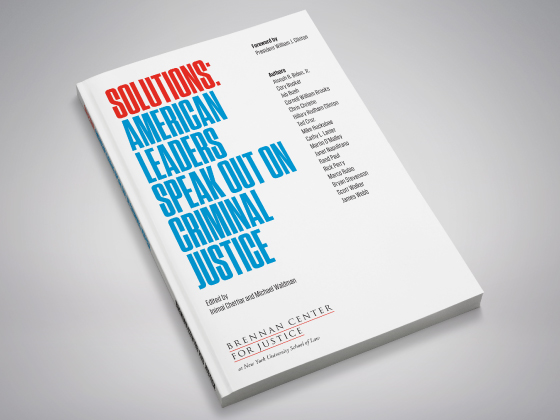
Brennan_Center_American_Leaders_April_30_2015-for-cghnyc-drupalb

Solutions: American Leaders Speak Out on Criminal Justice

Edited by Inimai Chettiar and Michael Waldman

Book Review

Michelle Alexander’s 2010 book The New Jim Crow has helped spark a national debate on the mass incarceration of Africans. Solutions, a collection of essays, is intended as a response. As many are written by presidential hopefuls, the range of solutions is cautious. None of the authors support the most obvious (and popular) criminal justice reform, namely legalizing or decriminalizing marijuana use.*

Likewise there are no essays by anti-Wall Street senators Elizabeth Warren and Bernie Sanders. Both were viewed as prospective presidential candidates when Solutions was being readied for publication.

That being said, I was intrigued to see so many Republican politicians, both of the neoconservative Christian and the libertarian stripe, abandon their tough-on-crime rhetoric to argue for reducing prison populations. The forward, by Bill Clinton, argues that despite extreme political polarization on other issues, ending the incarceration of Americans for minor and victimless crimes is one area ripe for genuine bipartisan cooperation.

In his essay, Marc Levin, Director of the Center for Effective Justice at the Texas Public Policy Foundation, suggests that conservatives, applying their core principles of personal responsibility, accountability and limited government, have become “the most vocal champions of prison reform.” In this regard, he and other key conservatives have clearly parted company with the Koch brothers and the American Legislative Exchange Council (ALEC), which continues to lobby for tough-on-crime legislation and increasing prison privatization.

Levin and editor Inimai Chettiar hold up Texas, Georgia, South Carolina and Pennsylvania as model states, due to their shift from prison building to community based alternatives. As Levin readily admits, Texas reforms were driven by a need to control ballooning prison costs in an era of severe budgetary shortfalls. He brags how Texas has saved taxpayers billions of dollars by eliminating mandatory minimum sentences (allowing judges more discretion in sentencing), by offering drug and mental health treatment as an alternative to incarceration, by increasing formal rehabilitation and through various measures aimed at increasing the employability of ex-offenders (including a provision for law abiding ex-offenders to seal their criminal record).

A few of the essays read like stump speeches, full of vague ideological platitudes without meaningful detail on how prison reform can be accomplished. Others are surprisingly detailed.

Here are some examples:

Vice-President Joe Biden (D): reads like a stump speech and quotes extensively from Martin Luther King. He calls for restoring police staffing cuts and more genuine community policing. Doesn’t explain where the funding will come from, given the massive debt this administration has racked up for bank bailouts and the wars in the Middle East.

Hillary Clinton (D): reads like a stump speech, with frequent references to what Robert Kennedy would do and “my friend” Nelson Mandela. Calls for respect for the law, ending inequality, reforming mandatory minimum sentencing, ending racial profiling by the police, increasing use of drug diversion (ie mandatory treatment as an alternative to incarceration), restoring police staffing cuts, increasing community policing and restoring voting rights to ex-offenders. She also makes no mention of how all this would be funded.

Ted Cruz (US Senator Texas – R): calls for more jury trials and an end to mandatory minimum sentencing. Proposes a federal law requiring prosecutors to disclose all exculpatory** evidence before an accused can enter into a plea bargain. Also supports the Military Justice Improvement Law. This would increase military convictions for rape by transferring responsibility for prosecution from unit commanders to independent federal prosecutors.

Mike Huckabee (former Arkansas governor – R): would eliminate waste by treating drug addicts, rather than incarcerating them. He would also work to build character in American young people by strengthening families.

David Keene (former president of the National Rifle Association (NRA) and the American Conservative Union: would reduce the number of crimes punishable by prison, end three strikes laws (which require mandatory life imprisonment for a third felony), amend grounds for probation revocation so they’re only used to protect communities from violent criminals and end arbitrary police violence against African Americans for nonviolent crimes.

Martin O’Malley (former Maryland governor – D): would abolish the death penalty because it’s expensive, ineffective, wasteful and unjustly applied (poor minorities are far more likely to receive the death penalty because they can’t afford adequate legal representation). He states that only six other (mainly authoritarian) countries have the death penalty: Iran, Iraq, China, North Korea, Saudi Arabia and Yemen. (For some reason he omits Egypt.)

Rand Paul (US Senator Kentucky – R): would end mandatory minimum sentencing, police militarization, disproportionate sentencing of minorities for drug crimes and civil asset forfeiture laws.** He would also allow juvenile/nonviolent offenders to have their criminal records sealed.

Rick Parry (former Texas governor – R): calls for increasing use of drug courts, expanded rehabilitation and mandatory drug and mental health treatment in lieu of incarceration.

Marco Rubio (US Senator Florida – R): would require federal government and regulatory agencies to publish all federal laws and regulations in one place, would end civil forfeiture laws and would rein in “out of control” regulatory agencies. (Me, too. I think they should start putting corporate white collar criminals in jail, but I doubt this is what he means).

Scott Walker (Wisconsin governor – R): advocates for more workplace drug testing and more programs to reduce heroin addiction.

James Webb (former US Senator Virginia – D): would appoint a federal commission on mass incarceration to study the problem some more (you can’t make this stuff up).


*At present marijuana has been legalized for recreational purposes in four states (Washington, Oregon, Alaska and Colorado) and for medical purposes in 11 other states. Marijuana possession has been decriminalized or reduced to a misdemeanor in many other states. Cannabis possession for any purpose remains a felony in only six states (Wisconsin, Texas, South Carolina, Oklahoma, Louisiana and Alabama).
*Exculpatory evidence is evidence that tends to exonerate a defendant of guilt.
**Civil asset forfeiture is a legal tool that allows law enforcement officials to seize, (without due process) property they assert has been involved in certain criminal activity. The burden remains on the defendant to initiate separate legal action to recover their property, even if they’re acquitted or charges are dropped.

Solutions is published under a Creative Commons license and can be downloaded free at Solutions

EU Plans War to Keep Europe White*

Reblogged from Libya360

For more than 500 years, Europeans have invaded and looted the planet, yet their home civilizations are deemed so fragile that they must be insulated against the cultures of the formerly colonized peoples. Having created millions of Muslim and African war refugees, the Europeans now gear up to attack the boats that might bring them to Europe.
20150428-LIBYA-slide-GK7J-superJumbo

By Glen Ford

“The thousands of deaths at sea are crimes of Europe and the United States.”

The United States has been the big, bad leader of the imperial world for so long, we may sometimes forget that most of the evils that beset our world have their origins in Europe, a small corner of the Earth that has for 500 years grown fat off the blood and resources of the rest of the planet. This Europe is a greedy little place, most of whose inhabitants believe they have somehow earned what they have stolen from the world’s darker peoples, and that they are entitled to continue stealing in perpetuity.

In 2011, in league with the United States, European members of NATO launched a totally unprovoked 7-month bombing campaign against Libya, resulting in the murder of Col. Muammar Gaddafi and the empowerment of Islamist jihadists throughout the northern tier of the African continent. Col. Gaddafi had warned that the Euro-American aggression would turn Libya into another Somalia, with vast numbers of people desperately fleeing across the Mediterranean Sea to escape the turmoil. Gaddafi was right, of course. Not only has Libya been reduced to a state of sheer anarchy and terror, but thanks to Europe and the United States, Hell has descended on Syria, and conditions in Somalia have grown even worse. The Europeans and their American cousins are intent on wiping out every vestige of civilization in the Muslim world – all the while spouting the same twisted, racist logic that they have employed for half a millennium: that Muslims and Africans are unsuited to civilization, and must be guided by the white hands of Europe, for their own good.

“Col. Gaddafi warned that the Euro-American aggression would turn Libya into another Somalia.”

The refugee crisis, the thousands of deaths at sea, are crimes of Europe and the United States. The Euro-Americans are just as unquestionably guilty as the arsonist who sets the fire that causes apartment dwellers to jump to their deaths from high windows to escape the flames. Now, the nations of the European Union, all 28 of them, are backing plans to launch air and naval attacks against boats in the ports of Libya and on the high seas, to make sure that the refugees that Europe and America have created do not wind up on European shores.

Read full article at Libya360