The Mass Psychology of Fascism

mass-psychology-of-fascism

The Mass Psychology of Fascism

By Wilhelm Reich (1933)

Free PDF:  Mass Psychology of Fascism

Book Review

In the the recent US election, Donald Trump successfully used false right wing populism to lure working people to vote against their own economic interests – as did Adolf Hitler during the 1930s. Writing in 1933, Reich foreshadows the present failure of the left to engage the working class. He also predicts the steady creep of western democracy towards greater authoritarianism and the recent rise of the populist New Right (via the Tea Party, Patriot and Alt-Right movement).

Why the Working Class Votes Against Their Own Economic Interest

Reich is the first major sociologist to offer a convincing analysis of the allure of fascism and reactionary politics for low income workers. Ever since the Reagan era, progressives have struggled to understand why blue collar workers are so easily persuaded to vote for politicians who go on to worsen the basic conditions of their lives. Reich pins the blame on authoritarian family structures most working people grow up in.

According to Reich, the strong allure of reactionary politics – and overt fascism – is based in mankind’s 6,000 year history of rigid patriarchal, authoritarian and hierarchical social organization.

He devotes a large portion of his book to the concept of sexual repression and the political, religious and economic institutions that deny women and adolescents full expression of their sexuality. These institutions support authoritarian family structures that enforce sexual repression. For millennia, this authoritarian control was exerted through political and religious mandates under which women literally became the property of men.

He contrasts modern society with early matriarchal societies in which children were free to “play doctor” with each other and both men and women were free to have sex with any other willing adults. These societies dealt with the potential for sexual excess or exploitation via self-regulation and group pressure. As Reich and many anthropologists have noted, murder, war, rape, prostitution and slavery were extremely rare in these societies.

Although women are no longer regarded as property in industrialized society, both women and adolescents continue to be denied full enjoyment of their sexuality under male-controlled political, economic and religious institutions.

Why the Working Class Craves Authority

As Reich convincingly argues, it’s not just women who suffer the adverse psychological effects of these structures. Being raised in excessively authoritarian family, educational and religious structures denies both men and women any experience of the natural capacity of self-regulation. Deeply fearful, anxious, guilty and confused about their perplexing inner drives, they have no confidence in their ability to conduct their lives without an external authority to guide and compel them.

The reactionary right knows exactly how to appeal to these unconscious fears and anxieties. First by creating even more rigid and authoritarian structures (eg outright bans on sex education, premarital sex, abortion, birth control and gay rights). These provide immediate (though temporary) relief by limiting choice. Secondly by promoting racist ideology that projects unhappiness and perceived loss of freedom away from ourselves onto an external “enemy) – Jews, Muslims, socialists, immigrants, terrorists, Hispanics, blacks, feminists, liberals, intellectuals and, increasingly, baby boomers.

Why Americans Don’t Vote

In the US only half of eligible adults register and a little over fifty percent of registered voters actually vote. Reich argues that it’s typical in highly authoritarian “democracies” for the passive, non-voting population to constitute the majority. He’s highly critical of the left for attempting to engage this demographic by addressing their appalling economic conditions – a strategy he insists is doomed to failure.

What the left needs to grasp, in his view, is that this politically inactive majority are too caught up in their own internal struggles to think in terms of their economic needs. To put it crudely, status-related needs, such as getting laid, fast cars and flat screen TVs will always be a much higher priority than wages or working conditions.

Instead of educating low income workers about economic and political injustice, Reich argues that leftists should directly address the emotional baggage the working poor carry from authoritarian family and school experiences. He proposes the best way to do this is through politically enlightened social reform activities, particularly directed towards youth and women.
Immigrants for Sale

Immigrants for Sale

Directed by Axel Caballero (2012)

Film Review

Immigrants For Sale is a documentary about the $5 billion a year private detention industry. Corrections Corporation of America, The Geo Group, and the Management and Training Corporation run over 200 facilities across the US, a total of 150,000 bed spaces. Because these facilities are paid by the number of beds they fill, they have absolutely no incentive to speed up the legal process that might lead to detainees’ release. As one facility auctioneer puts it, thanks to harsh immigration laws and skyrocketing refugee numbers, there’s an “endless supply of product.”

The film closely examines the role of the American Legislative Exchange Council, a right wing corporate lobby group founded by the Koch brothers, in writing anti-immigrant legislation adopted by various states and championing the construction of new private detention facilities. In most cases, state legislators with cozy relationships with ALEC and industry lobbyists impose these monstrosities on local communities against their wishes.

The filmmakers interview detainees’ families, immigrant rights groups and even former correctional officers who describe scandalous human rights violations by CCA et al, as well as their failure to provide nutritional food or adequate medical care or toilet facilities.

As a psychiatrist I was most appalled by the negligent and abusive treatment of mentally ill detainees. Because these facilities earn $197 a night to house detainees, they have no motivation to identify detainees with mental illness and transfer them to more appropriate treatment facilities. Detainees have no legal right to legal representation and often their families have no idea where they are. Both make their situation even more precarious. One mentally ill detainee featured in the film was beaten (one beating required hospitalization) and humiliated by corrections officers for three years before his mother secured his release.

Fortunately there is growing grassroots resistance to the private detention industry. One community successfully blocked – through sustained protest activity – the construction of a new detention facility. Another, Littlewood Texas, has been bankrupted by their decision to help bankroll a private detention facility. It remains vacant and unsold to this day.

ACLU Issues Ultimatum Over Trump Campaign Promises

trump

On Wednesday morning November 9, 2016, the American Civil Liberties (ACLU) published a personal message to president-elect on their website. It urges him “reconsider and change course” on certain campaign promises, going on to list some of the most troubling promises Trump has made:

  • Promising to force 11 million undocumented immigrants from the country.
  • Promising to ban Muslims from entering the country and heavily surveilling the ones who reside here.
  • Promising to punish women who have abortions.
  • Promising to reauthorize waterboarding and other forms of torture.
  • Promising to revise the nation’s libel laws, restricting freedom of expression.

It goes on to warn Trump he will have to face the ACLU if he presses forward and tries to make good on promises they view as unconstitutional:

If you do not reverse course and instead endeavor to make these campaign promises a reality, you will have to contend with the full firepower of the ACLU at every step. Our staff of litigators and activists in every state, thousands of volunteers and millions of card-carrying members and supporters are ready to fight against any encroachment on our cherished freedoms and rights.

Read more: ACLU Announces Massive Legal Action Against Donald Trump

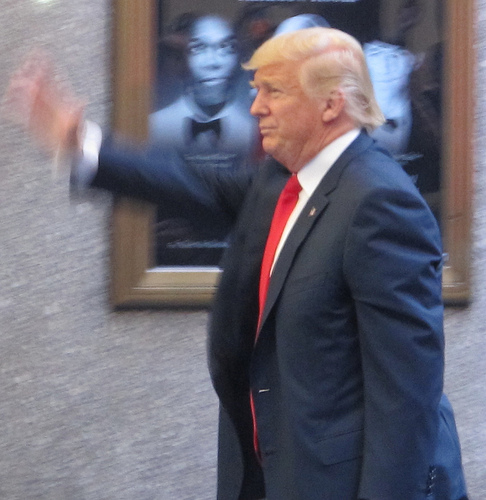
photo credit: AndrewDallos Donald Trump arriving at NBC tonight for Jimmy Fallon via photopin (license)

Nationwide Prison Strike Called for Sept 9

prison strike

Prisoners across the United States are calling for a nationwide prisoner work stoppage against prison slavery on September 9th, 2016.

Their goal is to begin an action to shut down prisons, which are totally dependent on inmate labor, across the country. According to US Uncut, US prisoners are paid from 0 to 45 cents an hour for contract work for highly profitable corporations such as Whole Foods, Walmart, McDonald’s, Victoria’s Secret, BP and AT&T.

September 9th is the 45th anniversary of the 1971 uprising in which prisoners took over and shut down Attica, New York’s most notorious state prison.

Non-violent protests, work stoppages, hunger strikes and other refusals to participate in prison routines have greatly increased in recent years. The 2010 Georgia prison strike, the massive rolling California hunger strikes, the Free Alabama Movement’s 2014 work stoppage, have drawn the most attention. There have also been large hunger strikes at Ohio State Penitentiary, Menard Correctional in Illinois, Red Onion in Virginia and elsewhere. The growing resistance movement includes inmates at immigrant detention centers, women’s prisons and juvenile facilities.

The Incarcerated Workers Organizing Committee (IWOC), created by the International Workers of the World (IWW), functions as a liaison to support prisoners in organizing and forging links between prisons and with fellow workers on the outside. IWOC, the only union representing prisoners, currently has 800 members.

As reported in the Nation, barriers to organizing prisoners are high. Most prisons deny inmates access to email, which makes communications between prisons difficult. Even within prisons, wardens block most prisoners’ union meetings. In 1977 the Supreme Court ruled prisoners have no First Amendment right to assemble if a warden feels a gathering threatens prison security.

In early 2015, the Free Alabama Movement published Let the Crops Rot in the Fields, laying out a new strategy –specifically tackling economic incentive – for ending mass incarceration. By refusing to work, prisoners directly attack the corporate profit motive underpinning mass incarceration. The IWOC has been sending copies of “Let the Crops Rot in the Fields” to prisoners all over the US.

According to the Nation article, the IWW were also instrumental in launching union drives at fast food restaurants in the early 2000s and the campaign for a $15 minimum wage.

For more information on IWOC and to help support the Sept 9 strike visit the IWOC Facebook page at https://www.facebook.com/incarceratedworkers/

French High Court Suspends Burkini Ban

ebayphoto credit: ebay

According to the BBC , France’s highest administrative court has suspended a ban on full-body “burkini” swimsuits that was imposed in a Villeneuve-Loubet on the Mediterranean coast.

The court found the ban “seriously and clearly illegally breached fundamental freedoms.”

The ruling could likely set a precedent for up to 30 other towns with similar bans.

Read more here

Invisible No Longer: Chicago’s Homeless

Street Life: Faces Uncovered

By Neal Karski, George Min, Tyler Dubiak and Scott Hilburn (2016)

Film Review

Street Life is a portrait of the Chicago’s homeless population. It begins by demolishing the myth that homelessness is a lifestyle choice. In addition to a wealth of statistics, the documentary includes interviews with homeless Chicagoans, social service workers, homeless advocates and random passersby. I found it intriguing that none of the women interviewed blamed the homeless for their predicament – while more than half the men did.

On any given night 750,000 Americans are homeless, and yearly 25-35 million spend some nights on the streets or in shelters. Worldwide 100 million people have no housing at all while one billion have grossly inadequate housing. Last year, over a million American children were homeless at some point.

In examining the causes of chronic homelessness, filmmakers identified the following breakdown (in Chicago):

  • 48% suffer from chronic drug or alcohol addiction
  • 32% are mentally ill
  • 25% are victims of domestic violence
  • 15% are unemployed veterans
  • 4% have HIV or AIDS

Because the homeless make huge demands on the public health system, it costs taxpayers far less to pay for their housing than to leave them on the street. After starting a Permanent Supportive Housing program two years ago, Illinois lawmakers reduced emergency room visits by 40%, nursing home days by 975%, inpatient days by 83% and psychiatric services by 66%.


#NoLameDuck Uprising this Novemember

The White House is planning to use the Lame Duck session of Congress after the election this November to pass legislation to ratify the Trans-Pacific Partnership (TPP).

1nold2

Our mission is to create the environment that makes this impossible. That’s why we are starting now to plan the #NoLameDuck Uprising! Sign up now to be part of it and we’ll stay in touch with you about what we need to do. There will be actions in Washington, DC and across the country.

The Lame Duck session takes place after the election and ends with the winter break in December. It is a time when some members of Congress have lost their seats but can still vote. The Lame Duck is often used to pass unpopular legislation. This year the Lame Duck runs from Nov 14 to 18 in DC, then members will be home for 10 days for Thanksgiving break and then they will be back in DC for the first three weeks of December, concluding on Dec. 16.

Tell Congress “Don’t Duck Democracy!”

Help spread the word about the #NoLameDuck Uprising. We need thousands to join in!

Download a flyer here: NoLameDuck qtr flyer

Here is a sign up sheet that you can take to events: NoLameDuck Uprising Sign

(Please scan and email the sign up sheet to info@popularresistance.org or mail it to 402 E. Lake Ave. Baltimore, MD 21212)

OUR GOAL = 5,000 signers  by the end of August!
So far we have 3,523.

Go here to sign: http://www.flushthetpp.org/nolameduck/

The FBI War on Rap

The FBI War on Tupac Shakur and Black Leaders

John Potash (2008)

Review

In the video below, author John Potash uses a slideshow format to discuss his 2008 book The FBI War on Tupac Shakur and Black Leaders. The book is a compilation of years of research (based on court documents, news reports, archival photos and FOIA documents) into the FBI role in the assassination and false imprisonment of black political leaders and rock stars.

This presentation mainly focuses on the FBI assassination of Tupak Shakur in 1996, though Potash also briefly covers the FBI murder of Malcolm X, Martin Luther King, Fred Hampton, Huey Newton, Jimi Hendrix and Bob Marley and the CIA murder of Robert F Kennedy.

As background, Bishop also outlines the key strategies of Cointelpro the FBI war against the Black Panther Party.  In addition to assassinating their leaders, the FBI collaborated with police intelligence units to imprison multiple Panther leaders on false charges, as well as extensive infiltrating their groups.

The Panther 21 Trial

Both Tupac’s Black Panther parents were framed on fictitious charges in the infamous Panther 21 trial in 1971. Tupac’s mother Afeni, who handled their defense pro se, got all of them acquitted. Tupac, who had numerous Panther mentors growing up, would become president of the New African Panther Organization (NAPO) in 1989,

In 1992, he helped broker a truce between the Bloods and Crips, encouraging them to focus their anger on the white power structure. In part due to his growing fame, the FBI responded with repeated attempts to assassinate him, as well as numerous arrests on fictitious charges.

By 1995, his financial resources depleted by multiple arrests and frivolous lawsuits, Tupac was eventually framed by an FBI informant on a phony sexual assault charge. Although he was acquitted on a rape charge, he would be sentenced to four years in prison (on a $5 million bond) for “touching a woman’s buttocks without her permission.”

Death Row Records

What horrified me most about this presentation was learning about Death Row Records, a recording company run by three undercover cops from the LAPD intelligence unit. The latter used their position in the recording industry to traffic drugs (the president of Death Row was an affiliate of Freeway Ricky Ross who distributed cocaine imported to the US by the CIA Contras) and guns and to murder performers who attempted to politicize rap music.

Death Row Records was also instrumental in ending the Bloods/Crips truce by instigating a fictitious East Coast/West Coast rap war and collaborating with police “rap squads” in Los Angeles, New York and elsewhere to frame truce leaders on phony charges carrying long prison sentences. They were also instrumental in breaking up Niggas wit Attitudes (N.W.A.)

Tupac was released from prison within days of signing with Death Row, which closely censored the political content of his recordings and performances. The FBI and the undercover cops at Death Row also instigated the phony feud between Tupac and rap star Biggie Small.

After Tupac left Death Row to start his own record company, the FBI organized his assassination and planted rumors in the press that Biggie Small had ordered the drive by shooting. They subsequently murdered Biggie Small to cover up the FBI role in Tupac’s murder.

Iranian TV Profiles African American Oppression

The Façade of the American Dream

Press TV (2013)

Film Review

This is a very troubling documentary by Iranian national TV about the present plight of America’s black community. It features a variety of African American voices, ranging from educators, lawyers and doctors to community activists. There are also four Caucasian faces – an economist, two anti-racist activists and the late assassination researcher John Judge.

The documentary is divided into four parts.

Part 1 This is Why We Have the Blues mainly addresses the problem of mental enslavement that results from being forced to adopt the culture of the dominant society. It goes on to address the plight of black youth when schools deliberately conceal their history from them and the campaign of assassination and incarceration of black leaders like Martin Luther King, Malcolm X, Fred Hampton, George Jackson and Medgar Evers when they successfully mobilized black people to stand up against African American oppression.

Part 2 From School House to Jail House looks on serious drawback of public school integration, which has denied black students access to black teachers and a curriculum that endows them with pride in their history and culture. This process has been aggravated by national and state mandate for high stakes testing – which one activist compares to apartheid South Africa’s Bantu education. This was a system dedicated to preparing black South Africans for menial jobs.

Part 3 Lack of Wealth, Lack of Health focuses on the lack of access to healthy food and routine medical care in inner city communities. For many African American men, the only access to a doctor or dentist is in jail or prison. The result is a significant lower African American life expectancy (on average, black men live eight fewer years on average than white men and black women six fewer years than their white counterparts).

Part 4 You Ain’t Free explores the rise of mass black incarceration in the 1970s, which one activist views as a direct response to African Americans rising up in the 1960s to demand their rights. During the mid-sixties, the US prison population was 70% Caucasian – at present that percentage is 30%. Meanwhile the total US prison population has increased from 300,000 to 2.4 million, despite a significant reduction in violent crime. All the commentators link black mass incarceration to the War on Drugs and police policies that deliberate target African American communities with arrest quotas (see The New Jim Crow).

Involuntary Servitude: Prisoners Fight California Wildfires

Thanks to climate change, California’s wildfire season got an early start in 2016 – in February. According to the BBC, 30 percent of California’s firefighters (roughly 4,000) are state prison inmates. They make $2 a day while at fire camp, and $1 an hour while on a fire line – saving state taxpayers $80 million a year. Inmates also earn two days off their sentence for every day they’re on a fire. The work of battling a 100 foot high fire wall is incredibly dangerous, and inmate firefighters suffer a “handful” of injuries every year – usually from falling branches and debris.

What’s Wrong With This Picture?

While the BBC feature quotes inmates as being honored by the “privilege” of fighting fires, the inmate fire fighting program is taking place against the backdrop of a federal court order requiring California to reduce overcrowding. In 2011, the The Supreme Court upheld  a lower court ruling ordering California to cut their prison populations (by reducing the sentences of low level offenders).

State correction officials complied by offering an early prison-release program to all minimum security offenders – but only “so long as it proves not to deplete the numbers of inmate firefighters.” In 2014, state Attorney General Kamala Harris argued against the program, concerned it would severely impact fire camp participation “a dangerous outcome while California is in the middle of a difficult fire season and severe drought.”

The New Jim Crow

In other words, California is openly balancing the state budget on the backs of prison slave labor.

Given that low income minorities comprise the great majority of California’s prison population – for circumstances largely beyond their control – this policy clearly violates the UN Convention on Human  Rights (which forbids slavery and involuntary servitude).

In fact, it sounds a lot like southern Jim Crow laws.*

In The New Jim Crow , lawyer Michelle Alexander describes in detail how urban police deliberately target minority neighborhoods for enforcement of drug possession and other victimless crimes. She also cites numerous examples of minority arrestees forced to cop guilty pleas owing to their inability to obtain competent legal representation.

Below prisoners fight a 2014 fire in Shasta County.


*In the Jim Crow system that followed Reconstruction, most southern states passed arbitrary vagrancy laws that were used to imprison black males and force them into unpaid slave labor on plantations, on the railroads and in factories and mines. See 1941: The Year Slavery Finally Ended