Speculating with our Food

In 2011, “food derivative” speculation replaced financial derivatives as the hot new investment promoted by major investment banks like Goldman Sachs and JP Morgan. According to numerous studies, food speculation rather than shortages, are the main reason for skyrocketing food costs.

The really scary news is that in addition to speculating heavily on food commodities, these same private equity funds are also buying up huge tracts of land in the third world.

The Great Land Grab

A 2009 research project by the Oakland Institute (The Great Land Grab) reveals startling facts about the corporate land grab in the third world – another major factor in skyrocketing food prices.

According to the International Food Policy Research Institute (IFPRI), foreign investors have secured more than 50 million acres of African farmland to develop factory farms for export crops. In addition to investment banks and private equity funds, multilateral agencies, such as the International Financial Corporation (the private sector branch of the World Bank), are also major players in the “corporatization” of global agriculture.

The IFC plays a dual role in increasing private investment in the third world – via direct investment and by pressuring developing countries to create “business enabling environments.” Another World Bank agency, The Foreign Investment Advisory Service (FIAS ), also plays a role by pressuring third world governments to improve their “investment climate,” by relaxing environmental, tenant rights and food security laws and abolishing tax and duties on foreign investments.

Africa is the major target, both for western investment banks and booming Asian economies, driving tens of thousands of subsistence farmers off land they have farmed for generations.

Corporatizing the Global Food Supply

A UK company started in 1997, called  Emergent Asset Management, claims to be the largest speculative fund investing in African industrial agriculture. It uses private equity to take control of large tracts of African farm land. Their prospectus attracts investors by predicting a armed conflict between the West and China will trigger mass food shortages – accompanied by price spikes that guarantee a handsome return to investors. Emergent’s founders, Susan Payne and David Murrin are former high level traders for Goldman Sachs and JP Morgan – well-known as the architects of food derivative speculation.

Emergent’s direct control of large amounts of agricultural land – combined with its ability to attract investors through its equity fund – puts unprecedented control of the global food supply in private hands. It does so by creating a new type of vertical integration, in which a single company controls vast amounts of land, food production and processing — while simultaneously inflating global food prices due to the speculative nature of the fund. As you can see in the video Emergent uses in their pitch to investors:

The Perp Walk – the 1% Have Names

In 2011, the Oakland Institute fingered other millionaires and billionaires grabbing African land via unscrupulous deals with corrupt village leaders (who sign away communal land rights without community consultation) – and by helping to orchestrate armed attacks on families who refuse to leave their land. At the top of the list are

Bruce Rastetter — CEO of Pharos Ag, which has bought more than 300,000 hectares in Tanzania for large-scale food crop, beef, poultry, and biofuel production. This project will displace tens of thousands of civil war refugees awaiting Tanzanian citizenship.

Leonard Henry Thatcher and David Neiman — runs Nile Trading and Development (NTD), which has bought 600,000 hectares in South Sudan through a secret agreement with influential locals who went behind the backs of other community members.

Kevin Godlington — (close associate of former prime minister Tony Blair) CEO of Crad-l and Director of Sierra Leone Agriculture (SLA) and its parent company, the UK-based CAPARO Renewable Agriculture Developments. SLA has bought 43,000 hectares in Sierra Leone to plant palm oil plantations.

Enter the Bill and Melinda Gates Foundation

The March 31 Guardian reports that the Bill and Melinda Gates Foundation (along with USAID and the Dutch and Danish governments) are backing a new World Bank scheme to further industrial agriculture at the expense of the smallholder farmers who produce 80% of the food consumed in the developing world. The new program is a ranking system called the Benchmarking the Business of Agriculture (BBA).

Here’s what the Our Land is Our Business campaign, organized by the Oakland Institute and like-minded food rights groups, has to say about the BBA:

“Despite a language that claims concerns for small farmers, the goal of this new agriculture-focused ranking system is far too clear: [to] further open up countries’ agriculture sectors to foreign corporations. The doing business [rankings] give points to countries when they act in favor of ‘ease of doing business’. This consists of smoothing the way for corporations’ activity in the country by, for instance, cutting administrative procedures, lowering corporate taxes, removing environmental and social regulations or suppressing trade barriers.”

People can sign on at Our Land is Our Business to send a message to the World Bank about looking after people rather than corporations.


 

How to Tell Where Your Food Comes from

barcode

Consumers in North America and Europe are consciously opting for nationally – or better still locally – grown foods as a way of reducing fossil fuel use and carbon dioxide emissions. Increasing concern over “food miles” (i.e. the distance their food travels before reaching their table) has led the US Congress to enact country of origin labeling (COOL) on fresh beef, pork, lamb, fresh fruits, nuts and vegetables. The right of the US government to require COOL was recently upheld by the World Trade Organization, in response to a complaint by Canada and Mexico. The WTO ruling is confusing, as the secret tribunal that decides such matters also ruled the COOL labeling requirements the US was requiring were excessively burdensome. See WTO Dispute Settlement.

Although COOL labeling is not required on frozen, canned or processed foods, the country responsible for manufacturing an item is indicated by the first three digits of the bar code. The latter is used universally in automated checkout systems.

Deciphering the bar code:

  • 00-13 USA & Canada
  • 30-37 France
  • 40-44 Germany
  • 49 Japan
  • 50 UK
  • 57 Denmark
  • 64-Finland
  • 76 Switzerland and Liechtenstein
  • 93 Australia
  • 94 New Zealand
  • 480–489 Philippines
  • 628 Saudi-Arabia
  • 629 United Arab Emirates
  • 690-695 China (including Hong Kong)
  • 740-745 Central America
  • 750 Mexico
  • 885 Thailand
  • 893 Vietnam

Consumers need to be aware that China, Hong Kong, Thailand and Vietnam have no food inspection regulations. Thus there is no guarantee food manufactured in these countries is safe.

For more country codes go to EAN codes

photo credit: jDevaun via photopin cc

How Big Corporations Avoid Tax

The Tax Free Tour

Film Review

VPRO-Marijee Meerman 2013

The Tax Free Tour is an hour long Dutch documentary (in English) about the highly specialized field of corporate tax avoidance. I found it astounding how many American corporations use overseas tax havens to avoid paying tax in the US. Some of the better known names include Walt Disney, Wells Fargo, Google, AT&T, Apple and even companies that promote themselves as socially responsible, like Starbucks and Amazon.

Apple, one of the worst offenders, pays only 1.9% of their annual income in corporate tax. As a US company headquartered in Silicon Valley, Apple should be liable to the standard 35% corporate tax rate. Their secret is diverting nearly all their income to a subsidiary in Ireland (which has one of the lowest corporate tax rates) – after first passing their royalty income through a Netherlands subsidiary (the Dutch charge virtually no tax on intellectual property revenue), a company listed in Virgin Islands and back to Ireland. In the accounting trade, this is known as a Double Irish with a Dutch sandwich.

The filmmakers calculate that profits offshored for tax avoidance purposes totaled more than $20 trillion in 2010. Approximately 100 of the world’s largest companies have subsidiaries in the Netherlands, owing to their low taxes on intellectual property royalties. Walmart has six Dutch companies, even though they don’t have a single Dutch store. Starbucks also diverts all their royalty income to the Netherlands. Because they have a trademark on “frappuccino,” they declare a certain percentage of the price as a “royalty” (and pay no tax on it).

My favorite part is near the end when a British Select Committee challenges a Starbucks executive on his claim that their British coffee houses have been running at a loss for fifteen years. After asking why they don’t close their British stores, she gets him to admit they avoid $1.6 million pounds in corporate taxes by diverting their UK income to the Netherlands. He won’t tell her how much tax they pay the Dutch government. Allegedly Starbucks and the Dutch government have a secret agreement not to disclose the amount. The committee chair sternly reminds the executive of all the free public services Starbucks receives in the UK, at the expense of other taxpayers.

Amazon avoids corporate tax by diverting a sizable portion of their revenue to Luxemburg. Google shelters their profits in Bermuda. Other favored corporate tax havens include Cyprus, the Cayman Islands, Mauritius, Singapore, Hong Kong, the UAE and Kenya.

The irony is that most of this income can’t be transferred to shareholders. Paying it out as dividends would necessitate repatriating the revenue to the company’s home country – and paying the prevailing corporate rate. Thus much of this money is loaned (as treasury bonds) to deeply indebted western countries – who struggle to balance their books owing to the trillions of dollars lost from tax avoidance.

Crossposted at Daily Censored

Giving Capitalism a Feminine Face

lagarde

Historically the IMF and World Bank, like the WTO, have been characterized by “faceless” leadership. Prior to the mid-nineties, only a handful of liberal intellectuals knew these powerful international institutions existed. Even after the 1999 Battle of Seattle effectively launched the antiglobalization movement, the leaders of these august institutions remained anonymous. When the IMF issued warnings against countries with excessive public spending, they originated from the agency itself, rather than IMF officials.

Prior to his June 2011 arrest for alleged sexual assault, no one outside of France had heard of Dominique Strauss-Kahn, who ran the IMF between 2007 and 2011.

The Historic Role of the IMF

The IMF was founded at the end of World War II at Bretton Woods. The British delegation, led by economist Maynard Keynes, wanted the IMF to be a cooperative fund member states could draw on to maintain economic activity and employment through the periodic economic crises that are characteristic of capitalist economies. The US delegation saw the IMF as more of a bank serving the needs of private lenders by ensuring borrowing states repaid their debts on time (see IMF History).

The US prevailed, and IMF loans came to be known as “structural adjustment” loans because they forced borrowing governments to adjust the structure of their economic activity. In most cases, this involved extreme austerity measures favorable to multinational corporations seeking access to cheap resources and labor markets. Such measures included privatizing publicly owned assets (airlines, telecoms, railroads, health systems, etc); liberalizing trade and financial markets; increasing incentives (corporate and individual tax cuts and waivers of environmental/labor regulations) for foreign investment; and supporting commercial export crops at the expense of food production.

Developing countries that blindly followed these policies, especially in South America and Africa, found their countries mired in debt and huge social inequalities. Russia was one of the most extreme cases: its economy shrank by 55% before President Vladimir Putin set the country on an alternative path to recovery.

Repackaging the IMF’s Image

Given the historic anonymity of the IMF leadership, you have to wonder about all the publicity being lavished on Christine Lagarde, the current IMF managing director. Although global economics is a low priority in the US media, she receives near daily attention in the British and international media. At sixty, Lagarde is still a strikingly attractive woman. Presumably, however, there is some political agenda behind the decision to promote this “rock star of the economic world,” as several media outlets have branded her

Lagarde’s Mission

Besides her carefully cultivated public persona, Lagarde is also unique in her willingness to lay out the IMF’s economic and political agenda. The policies she advocates include

  • Stronger economic growth (allegedly to promote global re-employment)
  • Deeper “integration” of European economies (translation: creation of a centralized fiscal body capable of making budgetary decisions for the entire Eurozone)
  • Improved “fiscal consolidation” for the US and Japan (translation: less deficit spending)
  • More domestic consumption and less reliance on foreign investment and exports in emerging economies (especially China)
  • A stronger firewall against debt contagion (translation: no bailouts) around weaker Eurozone nations like Greece, Italy and Spain
  • “Structural reform” (translation: anti-union legislation and reduced public spending) to improve the “competitiveness” of the industrial north.

Rebranding Structural Adjustment

Lagarde gives double messages about structural adjustment and austerity cuts. After warning that budget cuts lead to “recessionary tendencies,” she states that some countries (which, like Greece, are on the verge of economic collapse) need to cut their public budgets immediately. She feels others can stretch their cuts out over time.

Among specific “structural reforms” Lagarde favors are pension reform, with an optimal retirement age of 67, “wage restraint” (i.e. abandoning the expectation that wages will keep pace with inflation), and social service reforms in which “recipients of social assistance are expected to improve their situation.”*

The Fox Guarding the Henhouse

LaGarde isn’t without her critics. Former IMF chief economist Simon Johnson refers to her appointment as “the fox guarding the henhouse.” Johnson, like former World Bank economist Joseph Stiglitz, has been highly critical of the extreme concentration of financial power and it threat it poses to the global economy. This is the subject of Johnson’s recent book, Thirteen Bankers.

His criticism.of Lagarde centers mainly around her proposal to solve the Eurozone crisis by issuing additional loans to the debt-ridden “peripheral” countries (Greece, Spain, Italy, Portugal and Belgium). He maintains all these countries are looking at a default scenario, no matter how much money she throws at them. He accuses her of allowing EU leaders to use the IMF to conceal flaws in the Eurozone structure from voters.

*A questionable objective in countries with double digit unemployment

photo credit: Adam Tinworth via photopin cc

The Real Cause of Greece’s Economic Crisis

Debtocracy

(2011) Katerina Kitidi and Aris Hatzistefanou

Film Review

The 2011 Greek documentary Debtocracy effectively dispels the media myths about lazy Greek workers and and scofflaw Greek taxpayers being responsible for Greece’s present economic crisis.

The film begins with an overview of what its filmmakers (and I) feel has been a basic goal of both globalization and the creation of a single European currency – namely “labor discipline” and the suppression of wages in heavily unionized countries.

They show how sweeping deregulation in the industrialized world in the 1980s allowed manufacturers to eliminate unions by shutting plants down and reopening them as sweatshops in the third world. The subsequent creation of the Euro as a single currency allowed the central European countries (Germany and France) to use the mechanism of debt to weaken strong unions in peripheral Eurozone countries like Greece, Spain and Italy.

Thanks to relatively weak unions following reunification, Germany imposed a virtual ten year wage freeze. While workers suffered, German companies and banks racked up immense profits and stacks of cash, which they loaned to “peripheral” countries to finance big corporate tax cuts.

The bulk of the film focuses on the concept of “odious” debt and whether the Greek people should be forced to repay fraudulent loans from which they received no direct benefit. As Debtocracy poignantly depicts, Athens and other Greek cities are experiencing a third world humanitarian crisis, with massive homelessness, hunger and untreated illness.

Odious Debt: An American Invention

Odious debt was a principle invented by the US in the early 20th century to avoid repaying Spain’s war debt after the US took possession of Cuba following the Spanish-American War. George Bush invoked it following the US occupation of Iraq. His goal was to avoid repayment of Sadam Hussein’s debts to China, France, Germany and Russia. Since then approximately a dozen countries – most notably Argentina, Ecuador and Iceland – have repudiated so-called “illegitimate” debt incurred by deposed leaders.

The film focuses mainly Argentina’s and Ecuador’s default on their foreign debt. In 2001 the structural adjustments the IMF forced on Argentina bankrupted the country. A popular uprising forced the Argentine president to flee (in a helicopter), and the new government declared the IMF debt illegal and unconstitutional.

When Ecuador experienced a similar economic crisis and uprising in 2007, they, too, sent their president packing in a helicopter. In 2008, their new president Rafael Correa appointed a Debt Audit Commission to study the strong arm tactics (some of which John Perkins describes in Confessions of an Economic Hit Man) that caused Ecuador to borrow billions of dollars to pay for US-built infrastructure that only benefited Ecuador’s wealthy elite. Correa’s Debt Audit Commission ascertained that only 30% of their external debt was legitimately incurred.

CADTM’s Call for a Greek Debt Audit Commission

Iric Toussaint, a French economist who participated in the Ecuadorian Debt Audit Commission, believes a major proportion of Greek debt may have been fraudulently incurred. The following evidence supports this view:

  • Nearly one billion euros of debt resulted from a risky swap (of yen and dollars for euros) Goldman Sachs persuaded Greece to make in 2001. The transaction netted Goldman Sachs $600 million in profit (see Secret Greek loan).
  • Major German and French loans were issued on condition that the Greek government incur further indebtedness to purchase hundreds of millions of euros of German and French armaments.
  • Billions of dollars of Greek debt resulted from major cost overruns on the 2004 Greek Olympics (which cost twice as much as the Sydney Olympics in 2000). These have never been explained nor investigated.
  • In 2010 a former Goldman Sachs official was hired to manage the Greek public debt authority, with the result that the entire 2010 rescue package (103 million euros) was used to bail out Greek banks.

The film also discusses the March 2011 call by the Committee for the Abolition of Third World Debt (CADTM) to create an audit commission to examine Greek public debt. It ends with the ominous sound of a helicopter, eerily foreshadowing the forced resignation of Greek prime minister George Papandreou last November, when CNN advised him to get a helicopter to save himself from angry protestors (see Fall of Papandreou).

Resist or Die

END:CIV Resist or Die

2011, directed by Franklin Lopez

Film Review

According to the promo, END:CIV “examines our culture’s systemic addiction to violence and environmental exploitation.”

The title is drawn from Pac Man, an arcade came that first came out in 1980. In one of the world’s first video games, the player guides Pac Man, a small faceless mouth, through a maze while he devours Pac Dots and tries to escape blob monsters. The first three minutes of END:CIV superimpose a Pac Man game over images of old growth clear cuts, belching smokestacks, factory hog farms, wild fires, hurricanes and the US military’s ruthless killing machine. The sequence ends as a gigantic “GAME OVER” flashes across the screen.

The film is based on the Endgame, the best selling two volume book Derrick Jensen published in 2006. In Endgame, Jensen argues that mankind urgently needs to bring down “civilization” before it destroys the planet. He bases his case on twenty basic premises he lists at the beginning of both volumes. The film END:CIV examines four of them.

Premise 1 – industrialized civilization has never been and will never be sustainable, mainly because it’s based on non-renewable resources.

The film, like Jensen’s book, traces the rise of cities, which by necessity steal resources from distant regions and eventually denude the entire landscape of those resources. After making the case that the corporate elite are mindlessly and voraciously consuming an ever increasing amount of energy, land, water and other resources, the filmmaker reminds us that we live on a finite planet. He then argues that corporations will most likely continue this greedy consumption until everything is used up – or until we stop them.

Premise 2 – A major focus of industrialized civilization has been to destroy indigenous communities by force – because they don’t willingly allow the confiscation of their natural and mineral resources. A corollary of Premise 2 is that without its heavy reliance on violence, industrial civilization would collapse.

In an cameo from a public forum, Jensen explains that much of violence is invisible and a matter of conditioning. He gives the example of the cop who will pull a gun and drag you to jail if you don’t pay your rent or satisfy your hunger by eating off grocery shelves. Yet we are all indoctrinated to believe that people must pay for the right to exist on this planet.

The film goes on to criticize the main message put out by the nonprofit environmental movement: that people can remedy pervasive violence, resource theft and exploitation by making politically correct purchases.

In the view of Jensen and other activists featured in the film, Greenpeace, Sierra Club, Forest Ethics and similar “eco-bureaucracies” have essentially sold out by making preservation of the global economy more important than saving the planet.

This section is also highly critical of the dogmatic opposition of the environmental movement towards violent resistance. Jensen does a great send up of the movie Star Wars. In his version, the rebels don’t destroy Darth Vader by blowing up the death star. Instead they promote eco-tours and Fair Trade products from endangered planets and send waves of compassion and loving kindness towards Darth Vader, while locking themselves down on his ship. They also vote to condemn and exclude the renegades who propose to blow up the death star – for allowing themselves to be contaminated by Darth Vader’s culture of violence.

Premise 3 – the culture (of industrialized society) as a whole and most of its inhabitants are insane.

The section points out that, contrary to popular belief, no combination of fossil or alternative fuels will allow us to continue our current “happy motoring” society. It focuses on Alberta’s insane tar sands project, the most environmentally destructive enterprise in history.

Premise 4 – from the beginning, the culture of civilization has been a culture of occupation.

The film ends with a brief overview of the resistance movement in Nazi-occupied Europe. In the final scene, Jensen poses the provocative and disarming question:

“If your homeland was invaded by aliens who cut down the forests, poisoned the water and air and contaminated your food supply, at what point would you resist?”

The Anti-Tuberculosis Vaccine Americans Never Heard Of

TV ward

TB Ward

One side of the vaccine controversy Americans are extremely unlikely to hear about concerns the safest, cheapest and most widely used vaccine in the world – against tuberculosis (TB). Every country in the world, except the US and the Netherlands (where TB is extremely rare), uses or has used the TB vaccine (known as Bacillus Calmette Guerin or BCG) in public vaccination programs. The BCG controversy was my first introduction (in 1971) to the US government propensity to engage in conspiracies and cover-ups. This happened during my second year of medical school, in the TB module taught by University of Wisconsin infectious disease researcher Dr Donald Smith. Smith had grave concerns about disadvantaged US communities with high rates of tuberculosis infection, as well as the nurses and doctors who looked after them.

Prior to World War II, TB epidemics infected industrialized countries at levels comparable to the current rate of clinical depression. Roughly one out of three families had at least one family member who had died of TB or been sent to a TB sanatorium. Once a leading cause of death in the US, TB is very much a disease of poverty. Healthy subjects can carry the tubercular bacillus for years and only develop active illness if poor nutrition – or stress – lowers their natural immune state (see

With the post World War II boom and vastly improved nutrition and living standards, the incidence of TB declined drastically in industrialized countries. However in the large disadvantaged urban centers that characterize US society, rates of TB infection continue at pre-World War II rates. This is of particular concern with the emergence of “drug resistant” TB, related to a surge of new cases in AIDS and other immune-compromised patients.

History of the BCG

Albert Calmette and Camille Guerin first began work on the BCG vaccine at the Pasteur Institute in 1908. They developed their vaccine from the bacillus that produces bovine tuberculosis, based on Edward Jenner’s discovery that vaccinating people with “cowpox” produced immunity against smallpox, a far more virulent disease. The BCG was first used in humans in 1921. In 1928 the Health Committee of the League of Nations (precursor to WHO) recommended its use in mass immunization campaigns to prevent TB.

There was strong opposition to the vaccine, particularly in the US and Britain, which delayed global acceptance till after World War II. It was first widely used in Eastern Europe between 1945 and 1948. The vaccination of eight million babies with BCG prevented the anticipated TB epidemic, which always accompanies the massive poverty and deprivation that occurs when a society’s economic and social infrastructure is destroyed by war. The BCG’s success in war torn Eastern Europe led Britain to begin using it in 1953. Between 1956-63, they enrolled 54,239 children in a randomized controlled study, in which BCG proved 84% effective in preventing TB.

More recent studies show that BCG is much less effective in preventing pulmonary (lung) tuberculosis in the third world, where patients are often too malnourished to develop sufficient antibodies to give them full protection. However the BCG is still widely used in India and other third world countries, owing to its efficacy in preventing fatal complications of TB, when it spreads to the brain, liver, spleen and other vital organs

How the US “Prevents” TB

Sadly the vast majority of Americans – including many doctors – are unaware there is a safe, effective and inexpensive vaccine, called BCG, that greatly reduces the rate and severity of new tuberculosis cases. Unlike most other countries in the world, the US continues to resist the use of BCG to check spread of TB in our inner cities. Instead the CDC recommends routine skin testing (known as the Mantoux or PPD) of high risk groups. A patient who has been exposed to the tubercular bacillus (mycobacterium tuberculosis) has a positive reaction. They are then given four to nine months of drug treatment.

Most African American health providers over fifty are well aware of the benefits BCG. TB, more than any other chronic illness, is linked with poverty and poor nutrition. African American nurses I worked with in Seattle community clinics used to bootleg BCG from Canada to immunize high risk African American children.

As I mention above, I first learned about BCG at the University of Wisconsin Medical School, from infectious disease researcher, Dr Donald Smith.. Owing to massive bureaucratic bungling (combined with an unclear amount of sleaze, graft and cover-up), American health professionals have always had great difficulty accessing effective BCG vaccine. As of 1971, the only really effective vaccines were made in Denmark and Prague and had to be imported. Smith was so concerned about our risk of contracting TB from patients that he ordered BCG from Denmark, offering it to all 107 of us for $2 apiece.

According to Smith, the American vaccine, known as BCG-Tice, was notoriously ineffective in preventing TB in both animals and humans (see Why Not Vaccinate, Three Different BCGs, Differences in Biological Activity, and Efficacy and Applicability). It was a story I was to hear often about researchers and drug company CEOs with powerful friends in Washington. Rather than acknowledging the Tice vaccine was useless and importing Danish or Prague BCG, the Centers for Disease Control gave their blessing to the use of Tice in their two largest American trials (in Georgia and Alabama), trumpeting the abysmal results as “proof” that BCG is useless in preventing tuberculosis.

The Influence of Big Pharma

In The People’s Health: Public Health in Australia, 1950 to the Present, Milton James Lewis (The Peoples’ Health) also blames the growing influence of powerful pharmaceutical companies in US resistance to BCG. Thanks to Big Pharma’s aggressive marketing efforts, the US saw a major shift in the mid-1950s away from public health to “curative” medicine based on drug treatment.

As a long time single payer advocate, I also see a more sinister racial and class bias underlying this shift. In the US, which has consistently opposed publicly funded medical care, curative medicine is only an option for patients with the financial means to pay for it. Meanwhile public (i.e. government-funded) health measures, aimed at the poor and disadvantaged, are always the first on the chopping block at budget cutting time.

How Mammograms Don’t Save Lives

mammogram

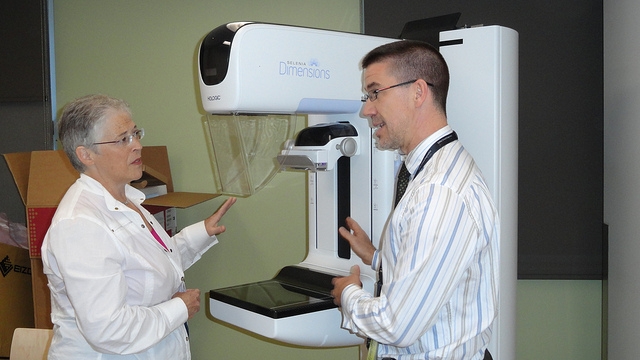
A year ago a New England Journal of Medicine study revealed that mammograms are largely ineffective in preventing deaths from breast cancer. According to Dr H. Gilbert Welch, in a New York Times oped, the mortality benefit of mammography is much smaller, and the harm of overdiagnosis much larger, than previously recognized.

According to Welch, one of the co-authors, the outcome of three decades of mammogram screening has been the diagnosis of 1.5 million women with early stage breast cancer. While this number might seem impressive, mammography has only diagnosed 0.1 million women with late-stage (potentially fatal) breast cancer.  This means that nearly a million women underwent unpleasant, invasive and unnecessary treatment (surgery, chemotherapy or radiation) for a non-lethal “cancer.”

Now a second Canadian study, published in the February 11 British Medical Journal, has replicated Welch’s findings. In the Canadian National Breast Screening Study, researchers followed almost 90,000 women for 25 years. Like Welch, they found that annual screening didn’t reduce breast cancer deaths. Instead they tended to lead to over-diagnosis and unnecessary treatment. In other words, cancers were found – and treated – that would have caused no problems during the patients’ lifetime.

In his New York Times editorial, Dr Welch laments misleading statements issued by the Komen Foundation and public health officials that early screening (by mammography) saves lives. The message they should be giving women is that they have a choice. While no one can dismiss the possibility that screening may help a small number of women, there’s no doubt that it leads many more to be treated unnecessarily for non-lethal cancers. Women need to decide for themselves about the potential benefit and risks. One serious potential risk Dr Welch doesn’t mention is the burden of radiation exposure from a lifetime of unnecessary mammograms.

Instead of screening all women with mammography, he recommends that health professionals only target women with a strong family history or genetic predisposition to breast cancer.

photo credit: photo credit: BC Gov Photos via photopin <a


How Cellphones Are Killing Off Honeybees

colony collapse

Resonance – Beings of Frequency

James Russell 2012

Film Review

Part II

Colony collapse disorder (CCD) is a phenomenon in which previously healthy worker bees simply vanish from their hive. First recognized in 2006, it represents a true agricultural emergency, as all food production depends, either directly or indirectly, on insect pollinators. Most environmentalists blame excessive pesticide use in industrial agriculture. However the film presents fascinating research implicating interference by microwave radiation (from cellphone towers) with the special magnetite-containing cells that allow bees to navigate using the earth’s magnetic fields.

Shore birds and songbirds also use the magnetic poles to navigate during long distance migration. A growing body of research suggests excessive microwave smog is responsible for declining bird populations.

A Public Health Problem of Mammoth Proportions

As Resonance – Beings of Frequency points out, in 2012 there were four billion mobile phone users and five million cell phone masts globally. Because this technology is in wide use on all seven continents, there is really nowhere people can go to escape it. In Sweden, patients diagnosed with electrosensitivy syndrome can get government support in insulating their homes against EMR (with tinfoil no less). As yet they are the only country in the world to recognize the condition and subsidize its management.

The filmmakers acknowledge that the sheer magnitude of the problem, given numerous other sources of EMR pollution (such as high tension power lines), means there is no easy or immediate way to reduce or eliminate this major environmental carcinogen. Among other potential remedies, they make a strong case for establishing a truly independent international body to monitor microwave-related health risks, unlike the International Commission on Non-Ionizing Radiation Protection.

At present the ICNIRP is totally dominated and controlled by the telecommunications industry. As the filmmakers point out, a truly independent body would issue safe Specific Absorption Rate (SAR) levels appropriate for children, who generally begin using cell phones at age eight.

ICNIRP was forced to adopt maximum SAR levels after the World Health Organization came out with research linking cell phones and brain tumors. Skull thickness is very important in establishing a safe SAR, as the skull protects the brain from microwaves produced by cell phones. Although children have much thinner skulls, for some bizarre reason has calculated SAR based on the average skull thickness of US military recruits.

The scientists in the film also urge telecommunication companies to be more forthcoming with their own research linking microwave exposure to cancer and other health problems. Only by making the information publicly available can individuals to make informed choices about limiting their exposure.

photo credit: {Guerrilla Futures | Jason Tester} via photopin cc

Cellphones and Cancer

Resonance – Beings of Frequency

James Russell 2012

Film Review

Part I


Resonance – Beings of Frequency is an informative, well-researched film about the growing number of health and environmental problems linked to cell phones, wi-fi and cell phone masts. The title refers to  “Schumann resonances,” named after German physicist Winfried Schumann. It refers to natural low frequency electromagnetic radiation emitted by planet Earth. The beginning of the film, which delves in depth into Schumann’s obscure discovery, is likely to be off-putting for people with no physics background. Electromagnetic radiation (EMR) is tough enough to get your head around, much less the concept of wave pulses and frequency. I sincerely hope people will ignore or fast forward the first few minutes. The rest of the film is well worth watching and discusses an alarming body of research about a potentially dangerous technology that was widely implemented without any testing of its potential effect on human health.

In my view, the only physics people need to understand the film is 1) that the microwaves produced by cell phones and cell phone masts, like light and radio waves, are a form of non-ionizing (i.e. non-radioactive) electromagnetic radiation 2) that by definition, EMR are intertwined electrical and magnetic fields that travel as waves and 3) that all life forms produce it. The scientist who explains electroencephalograms (EEGs) and electrocardiograms (EKGs) later in the film puts this across quite clearly. In higher animals, the presence or absence of life is measured by their ability to give off EMR. An EEG measures the EMR given off by the brain. When the EEG flat lines, the patient is considered brain dead. It’s game over when the EKG, which measures EMR emitted by the heart, flat lines.

The film mainly focuses on research linking the staggering increase of man made EMR in the environment and the sudden onset of global bee colony collapse syndrome; the sharp decline in migratory bird species and the current epidemic of breast and other cancers. Obviously the cancer link will be most concerning for most viewers. There are now several dozen studies of the cancer clusters found in people living in close proximity to cell phone masts. The film features an interview with a breast cancer survivor living near a mast who surveyed all neighbors within 0.5 km of the mast. Seventy percent of them had developed breast, prostate or other cancer, leukemia or some other fatal or debilitating illness.

The Link Between Microwave Exposure and Breast Cancer

The link between breast cancer and exposure to toxic endocrine disruptors (found mainly in insecticides, cosmetics, plastics and diets high in animal fat) was established nearly ten years ago. However it remains very troubling that large numbers of women with no genetic history or lifestyle exposures are developing breast cancer as young as thirty-five or forty. The film suggests many of these cases relate to a far more insidious lifestyle factor. With more than 500 million cell phone masts scattered all across the planet, electromagnetic smog is an environmental exposure that is virtually impossible to avoid.

Resonance – Beings of Frequency presents some very convincing research about the negative effect of microwave radiation (the type produced by cell phones and cell phone masts) on Melatonin production and the essential role this hormone plays in immune function. This is the first time I have seen a mechanism proposed to explain how wireless technology might be increasing cancer rates.

A lot of people are aware of melatonin’s role in promoting sleep – that low light levels cause the brain to produce melatonin and that this is the hormone that sends people off to sleep. Studies showing that it’s also an antioxidant (i.e. a vitamin or hormone that destroys free radicals) even more powerful that Vitamin C or Vitamins less well publicized. However it’s well recognized that the main cause of aging and most forms of cancer can be traced to free radicals attacking the nucleus of normal cells.

Recent research suggests that the pineal gland (the part of the brain that produces melatonin) can’t distinguish between light waves and other forms of EMR – that this explains why people exposed to high levels of microwave radiation produce less melatonin. Presumably this makes their body less efficient in destroying the free radicals that cause cancer. Studies showing that patients with breast and prostate cancer have lower Melatonin levels tend to validate this hypothesis.

(To be continued with a discussion of the link between cellphone technology and bee colony collapse disorder, which is decimating bee populations worldwide.)